Taking the Course in a Classroom
A classroom ATV safety course can be a good fit for a young Pennsylvania rider who learns best with an instructor and room to ask questions. The hard part is knowing which course to choose, what to confirm before signing up, and what the certificate allows. Here’s how to plan the class and prepare for riding afterward.
Who should take a classroom ATV safety course
Pennsylvania’s ATV safety training rules matter especially for young riders. Before enrolling, check the requirements for the rider’s age and where the machine will be used. A course certificate is not a substitute for meeting age, supervision, machine-size, registration, or land-access rules.
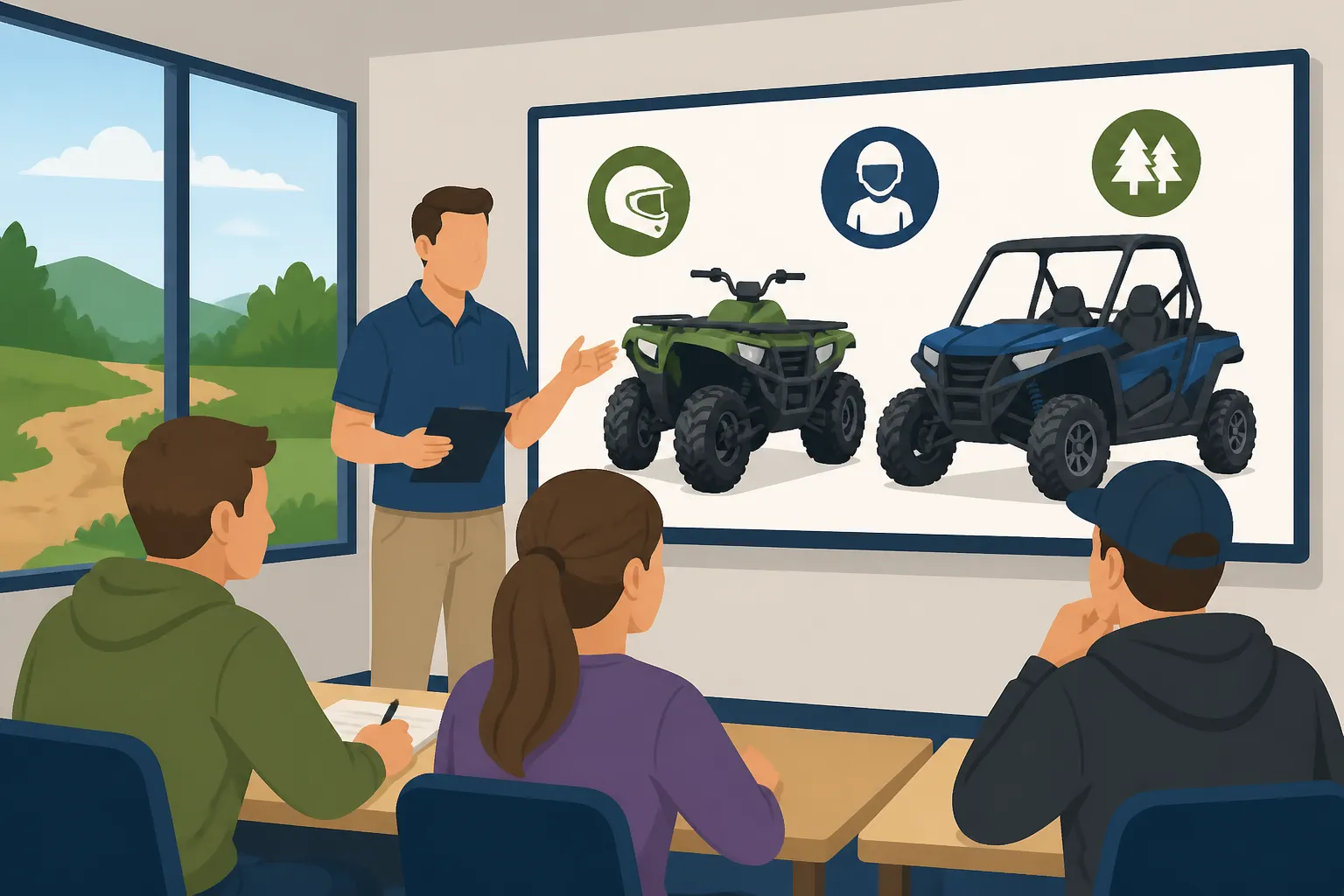
A classroom course usually means instruction with a person leading the lesson, rather than completing all learning independently online. It may include discussion, videos, demonstrations, written materials, or other activities. Course formats differ, so don’t assume that a classroom session includes time on an ATV. Ask the instructor whether any practical riding or skills assessment is included and what the student must complete to receive a certificate.
For families with a child between 8 and 15, start by checking the state’s age-specific training rules and the course options available locally. The details are summarized in Pennsylvania ATV Safety Certificate Requirements and Pennsylvania ATV Course for Ages 8 to 15. Riders younger than 8 face separate restrictions on state land; completing a course does not remove them. See Why Under Eights Cannot Ride Pennsylvania State Land before making plans for a younger child.
A classroom setting can help a student who wants to ask questions as the material comes up, needs an instructor to explain unfamiliar terms, or benefits from a scheduled learning session. It can also make it easier for a parent or guardian to understand the same safety concepts and follow up at home. But a classroom course is not automatically better for every learner: it may involve travel, a fixed schedule, or a limited number of available sessions.
The course certificate also has a specific purpose. It confirms completion of the approved safety training required for the applicable rider. It does not act as an ATV registration, trail permit, insurance policy, or permission to ride on private property. Each of those can have separate requirements. For a broader look at youth rules, use Pennsylvania Rules for Riders Aged 8 to 15.
How to find and book a classroom course
Begin with an approved Pennsylvania course or instructor rather than relying on a general search result or an informal safety presentation. Course availability can change by location and season. The state’s course information and instructor listings are the best place to confirm that a class is recognized and that it serves the rider’s age group.
Use Where to Take a Pennsylvania ATV Safety Course as a starting point. If you are looking specifically for instruction for a child, Finding a Pennsylvania Youth Safety Instructor may help you narrow the search. Contact the instructor before making travel plans or assuming a class is open.
When you reach out, ask direct questions. A short call or message can prevent a wasted trip and clarify whether the student is eligible for that session.
- Is the course approved for Pennsylvania ATV safety training? Confirm that it meets the requirement relevant to the rider, not just that it covers general ATV safety.
- What ages does the class accept? Some sessions may be designed for a particular age range or learning level.
- Is the course entirely classroom-based? Ask whether it includes a practical exercise, a riding component, or a separate follow-up session.
- What must the student complete to earn the certificate? Find out whether attendance alone is enough or whether the student must also pass a test or finish an activity.
- What should the student bring? The instructor may have specific instructions about registration, identification, writing materials, or other items.
- How long is the session, and where is it held? Confirm the start time, address, parking arrangements, and whether the student must stay for the full class.
- How will the certificate be issued? Ask when and how the family will receive proof of completion, especially if the certificate is not provided at the end of class.
Make sure the registration name and age details are accurate. If a parent or guardian must enroll the child, clarify whether the student also needs to be present during registration or whether a form must be completed in advance. Follow the instructor’s instructions rather than assuming another provider uses the same process.
If no classroom course is available nearby, ask whether a future session is planned or whether an approved alternative is available for the rider’s age. Pennsylvania also has online course options for some riders; eligibility can depend on age. Check Pennsylvania Online Courses for Riders Sixteen and Over rather than assuming that an online course is an option for a younger student.
| What to confirm | Why it matters |
|---|---|
| Course approval | A general safety class may not satisfy the relevant Pennsylvania training requirement |
| Eligible ages | A class may be limited to certain riders |
| Class format | “Classroom” does not necessarily mean hands-on riding practice |
| Completion requirements | The student may need to finish more than the scheduled lesson |
| Certificate delivery | Families need usable proof of completion after the course |
| Current schedule | Locations and dates can change, so verify before traveling |
Avoid signing up based only on an old calendar or a third-party listing. A course can be full, moved, canceled, or no longer offered at a listed location. Confirm the session directly through the approved provider before setting aside the day.
What to expect on class day
A classroom course gives the student a structured place to learn about safe decisions before riding. The exact curriculum and activities depend on the provider, but a useful course should help students understand that controlling an ATV is only one part of safe riding. Riders also need to recognize hazards, follow rules, use protective equipment, and know when not to ride.
Students may encounter topics such as:
- Choosing and wearing a properly fitted helmet and other protective gear.
- Understanding basic ATV controls and what they do.
- Preparing a machine for a ride and noticing problems that could make it unsafe.
- Keeping a speed and riding style appropriate to the terrain and the student’s ability.
- Handling hills, turns, uneven ground, and changing trail conditions cautiously.
- Avoiding unsafe riding with passengers or on a machine that is not designed for them.
- Respecting trail signs, landowner directions, closed routes, and other trail users.
- Knowing how to respond if a rider becomes separated from the group or someone is injured.
These are examples of safety issues a family should expect to discuss, not a promise that every course covers each item in the same way. Ask the instructor about the actual curriculum, especially if you want the student to gain experience with a specific skill. A classroom explanation can introduce a technique, but it does not prove the student can perform it safely on a machine.
Arrive with enough time to check in, settle the student, and handle any paperwork. A young rider who is tired, rushed, or worried about being late may have a harder time concentrating. If the instructor permits a parent or guardian to attend, consider whether that would help the student. If adults are not allowed in the classroom, ask whether there is a separate information sheet or contact person for parent questions.
Encourage the student to speak up. Questions about helmets, hills, passengers, or what to do when a trail becomes difficult are useful, not embarrassing. A class is a chance to address uncertainty before it becomes a problem on a ride. It is also sensible to tell the instructor if the student has little experience with machines, has difficulty reading course materials, or may need an accommodation.
Do not treat a certificate as proof of riding readiness. A student may complete the course and still need close supervision, more practice in a safe setting, or a smaller and more manageable machine. The adult responsible for the ride should decide whether the child is ready for the conditions, not just whether the course is complete.
After the course: certificates, supervision, and riding plans
Once the student finishes the course, follow the provider’s directions for receiving and keeping the certificate. Check the name and other details on the document. If anything is incorrect, ask the instructor or issuing provider how to fix it rather than editing the document yourself.
Keep the certificate somewhere it can be found when needed. A clear photograph or digital copy can be useful as a backup, but it is not necessarily a substitute for the form of proof required in a particular situation. Confirm what the rider must carry or show, and keep the original in a safe place when it is not being used. Carrying the Certificate on a Ride covers the practical question of having proof available away from home.
The certificate is only one piece of a lawful and safe ride. Before heading out, check that the machine is appropriate for the rider and the route, that required registration and permits are in order, and that the location is open to ATVs. A course does not authorize riding on a closed trail, a road that is not designated for ATV use, or private land without permission. Nor does it replace required insurance where insurance rules apply.
Parents and guardians should also plan for supervision. Explain who is responsible for the child during the ride, where the group may travel, and what to do if the child loses sight of the adult or encounters a difficult section. Set a clear rule that the child stops and asks for help instead of trying to keep up on terrain that feels unsafe. A certificate supports safer decision-making, but adults still need to match the outing to the child’s ability and the conditions.
Before the first ride after class, make a simple readiness check:
- Confirm the rider’s age-related rules and any supervision requirements.
- Check the ATV’s size, condition, controls, tires, brakes, and lights.
- Fit the helmet and protective clothing before the engine is started.
- Choose a legal route that suits the rider’s experience.
- Review trail conditions and closures, and agree on a turnaround point.
- Carry any required paperwork and emergency supplies.
- Keep the first outing short enough to assess how the rider handles the machine and terrain.
If the student is not ready for a particular route, postpone that ride or choose an easier setting. There is no need to use every new skill immediately. A gradual start gives the rider time to apply the classroom lessons without pressure from speed, rough terrain, or a group trying to move quickly.
If you are unsure whether a certificate from another state, a previous course, or a different type of training is accepted, verify it with the appropriate Pennsylvania authority before relying on it. The answer can depend on the document and the rule involved. Does Pennsylvania Accept an Out-of-State Safety Certificate? explains why it is better to confirm recognition than to assume that similar wording means the certificate qualifies.
A classroom course is most useful when it becomes part of a larger safety routine: learn the rules, practice cautiously, use proper gear, supervise young riders, and check access before every trip. Make sure the student understands that completing the lesson is the beginning of responsible riding, not a guarantee that every machine or trail is suitable.
Disclaimer
This article is for general informational purposes only and does not constitute professional advice. Laws, prices and regulations vary by location and change over time. Consult a qualified professional for guidance on your specific situation.